Home › Speed Bumps, Curbs, and Asphalt Accessories
Control traffic and protect pedestrians with professional speed bump installation in Houston, TX. We install asphalt speed humps, wheel stops, curbs, and other lot accessories. Proper placement and sizing improves safety without hurting drivability. Request a site review to design the right traffic calming layout for your property.
Precision Asphalt Houston provides professional speed bump installation throughout Houston, TX, Texas and the surrounding area. Our licensed, insured crew delivers safe, clean, on-time work with a free estimate before anything begins. Call (346) 523-8307 or request your free quote.
Practical Speed Bump Installation for Houston Properties
Speed bump installation is not a one-size-fits-all task. At Precision Asphalt Houston, we start by walking your property with you and identifying exactly where traffic is too fast and where vehicles must slow down to protect people and property. On a typical commercial lot, this includes crosswalks, school or daycare drop-off lanes, drive aisles in front of storefronts, and drive-thru lanes. We look at sight lines, existing drainage, and how fire trucks and delivery vehicles access your site before we ever cut into the asphalt.
Once locations are set, we confirm whether you need speed bumps or speed humps. Bumps are shorter and more abrupt, used for low speed areas like alleys and tight parking aisles. Humps are longer and smoother, more appropriate for entrance drives or residential communities. This choice affects not only driver comfort but also emergency response times, so we often coordinate with your property manager or HOA guidelines.
For permanent asphalt or concrete speed bumps, we saw-cut the outline first so the new work ties into the existing pavement cleanly instead of crumbling at the edges. We then mill or chip out the area to the required depth, usually 1.5 to 3 inches depending on the design profile. After cleaning and tacking the surface, we place and hand-shape hot mix asphalt to the specified dimensions, compact it with a roller or plate compactor, and then apply reflective striping once it has cooled.
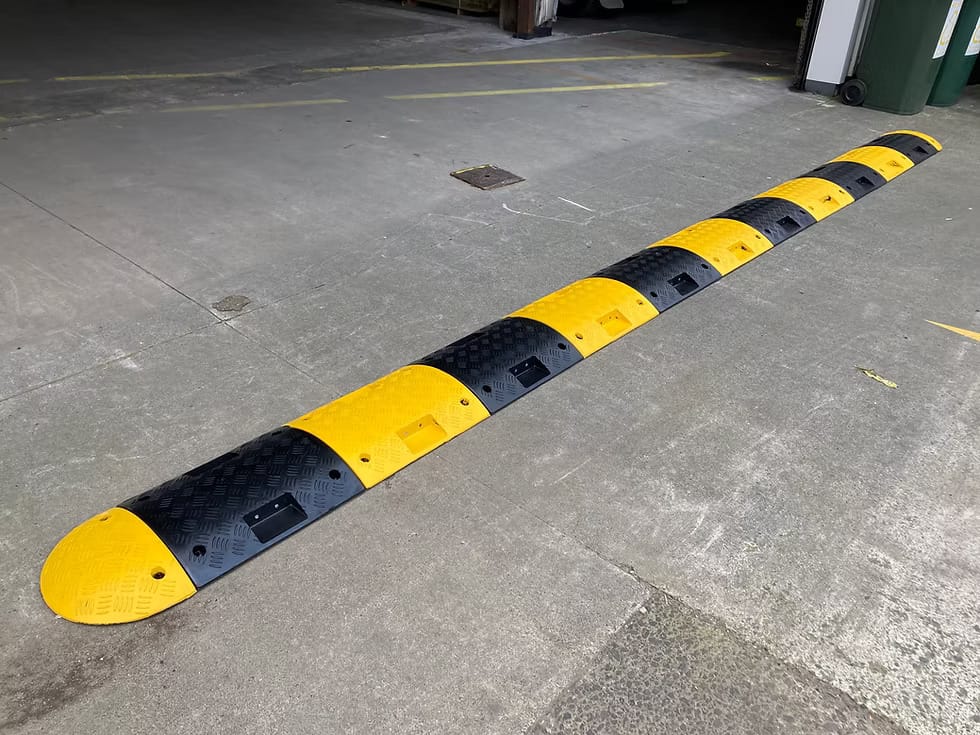
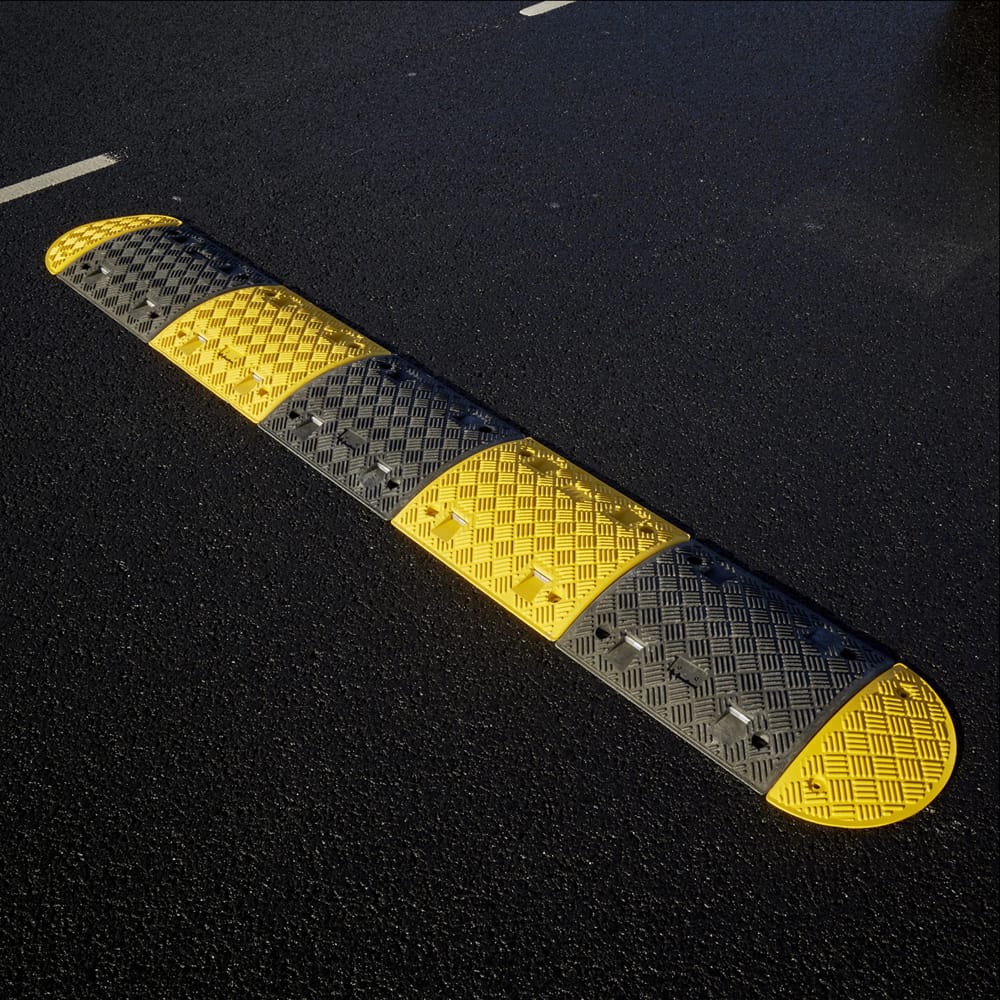
For modular rubber or plastic speed bumps, used often in small private lots or where future removal is likely, we drill into the existing pavement and use mechanical anchors rated for Houston’s heat and rainfall. These units are laid out according to manufacturer specs so there are no gaps that collect water or debris. We also ensure transitions at the ends are flush so they do not catch low vehicles.
Curbs and Wheel Stops That Work With Your Asphalt, Not Against It
Curbs and related accessories control how drivers use your lot and how water moves across it. Precision Asphalt Houston installs extruded concrete curbs, integral rolled asphalt curbs, and pre-cast wheel stops based on what your site needs rather than a default option. For example, on retail centers along FM 1960 or Westheimer, we often recommend concrete curbs in front of storefronts for clean lines and better protection from vehicles. In back-of-house loading areas or industrial yards, a rolled asphalt edge can be more forgiving for trailers and forklifts.
The process for new curbs starts with layout and string lines to maintain a consistent height and slope. We look at existing ADA routes, entrances, and drainage points. For concrete curbs, we set forms, place reinforcing where required, and pour a mix that can handle Houston’s repeated heat cycles. After finishing and curing, we remove the forms and backfill the outside edge to prevent undermining. With asphalt curbs, we install them hot along the pavement edge and compact to create a dense, smooth profile that sheds water back into the lot instead of onto landscaping or sidewalks.
Wheel stop installation sounds simple but is a common source of damage when done poorly. We drill into the asphalt or concrete, use corrosion-resistant rebar or spikes, and set each wheel stop straight and at a consistent distance from the curb or building. This prevents vehicles from creeping into sidewalks while still allowing bumper overhang where needed. We also pay attention to fire lanes and dumpster access so wheel stops do not create obstacles for large vehicles.
Asphalt Accessories That Improve Safety and Traffic Flow
Speed bump installation is usually part of a larger traffic control plan rather than a stand-alone fix. Precision Asphalt Houston offers a full set of asphalt accessories that work together: raised crosswalks, pedestrian refuge islands, bollards, pavement reflectors, and striping layouts that match your exact traffic patterns.
Raised crosswalks are essentially wide, flat speed tables that prioritize pedestrians. We tie them into your curb ramps and ADA routes, ensuring slopes meet accessibility requirements. These are especially useful near schools, churches, or medical offices where foot traffic crosses active drive aisles. The work involves milling or removing the existing asphalt, installing the raised section, then restriping with high-contrast markings and often thermoplastic for visibility in heavy rain.
We also install bollards and protective posts at building corners, overhead door frames, and gas meters so minor driver errors do not turn into major structural or safety incidents. These are core-drilled into concrete or set in new concrete footings with enough depth to handle realistic impact forces from vehicles that frequent your site.
For visibility at night and during Houston’s frequent thunderstorms, we can incorporate reflective markers along speed bumps, lane lines, and crosswalks. These small accessories dramatically change how clearly drivers see changes in elevation and direction when surfaces are wet. When combined with fresh striping and properly placed signage, speed bumps and curbs become predictable, not surprising, to your customers and residents.
How Houston’s Climate Affects Speed Bumps and Curbs
Houston’s combination of heat, humidity, and heavy rain drives many of the material and design choices for speed bump installation and other asphalt accessories. Pavement temperatures on an August afternoon in Houston parking lots can exceed 140 degrees. Lower quality rubber products may soften, deform, or lose color under those conditions. At Precision Asphalt Houston, we specify speed bumps and humps that are rated for high surface temperatures and we rely on hot mix asphalt designs that stand up to local conditions.
Rain is another factor. Poorly designed bumps or curbs can dam water and create ponding that leads to premature pavement failure. Before installing any raised feature, we check slopes with a level or laser and make adjustments so water keeps moving toward inlets or street gutters. In some cases, we extend a speed hump slightly or adjust its profile so water crosses without backing up against building entrances or low spots.
Seasonal timing matters too. While Houston does not see long freezes, cold snaps can still affect how well asphalt compacts and bonds. For permanent asphalt speed bumps, we prefer moderate temperatures so the mix stays workable and compacts tightly. When scheduling, we also account for business operations. For active retail centers or healthcare facilities, we often phase bump and curb work during off-peak hours or overnight, then reopen sections as soon as they are safe to drive on.
UV exposure and oxidation are long term issues. Bright yellow paint on speed bumps, curbs, and wheel stops fades quickly in direct Houston sun. We use traffic-grade coatings and, where budgets allow, thermoplastic markings that last longer. We also speak openly with clients about realistic repaint intervals, often 18 to 36 months depending on traffic volume and shade.
Cost Drivers, Options, and What to Decide Before You Call
Several concrete factors determine the cost of speed bump installation and related accessories on your Houston, Texas property. The first is quantity and size. A single 12 foot asphalt bump will cost less per unit than several isolated sections with complicated tie-ins. Height and profile matter too. Taller or longer devices require more materials and labor and may require more traffic control during installation.
Existing pavement condition is another major driver. If your parking lot is already rutted, alligatored, or holding water, simply adding speed bumps will not solve the underlying issues. In those cases, Precision Asphalt Houston may recommend repairing base failures or resurfacing key areas before adding raised features. This costs more upfront but prevents your new bump from sinking, cracking, or detaching within a short period.
Material choice also affects price and lifespan. Permanent hot mix asphalt or concrete bumps cost more initially than some modular units but integrate better, especially in high traffic areas like apartment complexes or busy shopping centers along I-10 and Beltway 8. Modular rubber or plastic options may fit smaller lots or where you are testing locations before committing to permanent installations.
Before you call, decide a few things: where your biggest safety or speeding complaints are coming from, what kinds of vehicles regularly use your property (sedans, delivery trucks, 18 wheelers, emergency vehicles), and whether you expect to modify your site layout in the next few years. Share any city or fire department guidelines you are bound by. With that information, we can quickly narrow down appropriate bump types, heights, and spacing, and outline a realistic budget and phasing plan.
Our Installation Process and What You Can Expect on Site
When you schedule speed bump installation or curb work with Precision Asphalt Houston, we begin with a site visit and a simple sketch showing bump locations, curb changes, and accessory placements. This helps you visualize the plan and confirm that drive aisles, fire lanes, and ADA paths are treated correctly. For larger properties, we may overlay this on an aerial image of your lot to clarify traffic patterns.
On installation day, our crew begins with barricades and cones so drivers understand what areas are temporarily closed. We cut, demo, and clean surfaces first, then immediately install the new asphalt or concrete so your lot is left open to traffic as quickly as possible. For many small to mid sized commercial lots, we can install several speed bumps, wheel stops, and basic accessories in one working day, with striping following soon after.
We communicate clearly about drive times. Hot mix asphalt speed bumps usually accept light traffic within a few hours, but heavy trucks may need to be restricted until full cooling and initial set. Paint or thermoplastic striping is timed accordingly so markings are not scuffed the same day they are installed.
After completion, we walk the site with you, check clearances, and verify that signs, arrows, and markings match the way drivers naturally move through the property. If any small adjustments to wheel stops, signage, or reflector placement are needed, we typically handle them on the spot. Our goal is that when we leave, your new speed bumps, curbs, and accessories feel like a natural part of the lot, not an afterthought that frustrates tenants or customers.