Home › Asphalt Sealcoating & Crack Filling
Protect your driveway with professional asphalt sealcoating in Houston, TX. We clean the surface, fill cracks, and apply a quality sealer to guard against weather and traffic. Sealcoating restores rich black color and helps prevent costly repairs. Book routine asphalt maintenance to keep your driveway looking new longer.
Precision Asphalt Houston provides professional asphalt sealcoating throughout Houston, TX, Texas and the surrounding area. Our licensed, insured crew delivers safe, clean, on-time work with a free estimate before anything begins. Call (346) 523-8307 or request your free quote.
Protecting Your Asphalt In Houston’s Heat And Storms
When you live and work in Houston, your asphalt takes a beating. Intense sun, 100-plus degree days on the pavement, sudden downpours, and occasional cold snaps all work together to dry out, oxidize, and crack your driveway or parking lot. At Precision Asphalt Houston, our asphalt sealcoating and crack filling service is built specifically around those local conditions, not a generic one-size-fits-all approach.
Asphalt sealcoating is a protective liquid layer that goes on top of your existing pavement. Think of it as sunscreen and a raincoat for your asphalt. It slows oxidation from UV exposure, helps keep water and chemicals from soaking in, and gives the surface a rich black finish that looks new. On commercial parking lots, it also makes line striping brighter and easier to see at night or in heavy rain, which matters a lot with Houston traffic.
Crack filling is the other half of the equation. Those first small cracks you see after a hot summer or a heavy rain followed by heat are the early warning signs that water is starting to reach the base layer. In our climate, once water gets under the asphalt, the combination of heavy vehicles and soaked soil can quickly turn minor cracks into potholes and depressions. Filling those cracks with the right material at the right time can buy you many extra years before you ever have to think about resurfacing.
Precision Asphalt Houston focuses this service on both appearance and longevity. We look at how your pavement actually gets used, the age of the asphalt, how it drains during Gulf Coast storms, and the types of loads it carries, then tailor the sealcoat and crack repair plan to match. The goal is simple: help you spend less over the life of your pavement by doing the right maintenance work at the right time.
How Our Asphalt Sealcoating & Crack Filling Process Works
A good sealcoating job in Houston starts with preparation. When our crew arrives, we first walk the entire area with you. We note problem spots like standing water areas, alligator cracking, oil-saturated patches, and edges that have begun to ravel. This walkthrough shapes the scope, so you know exactly what we will be doing before any material is mixed.
Next, we clean the surface thoroughly. We use industrial blowers, brooms, and wire brushes to remove loose rock, leaves, dirt, and trash. In high-traffic spots that are soaked with oil or transmission fluid, we apply a degreaser and mechanically scrub the area. Sealcoat will not bond to oil, so this step is vital in Houston, where many lots see constant vehicle leaks. We rinse or power clean as needed, then allow time for the pavement to dry.
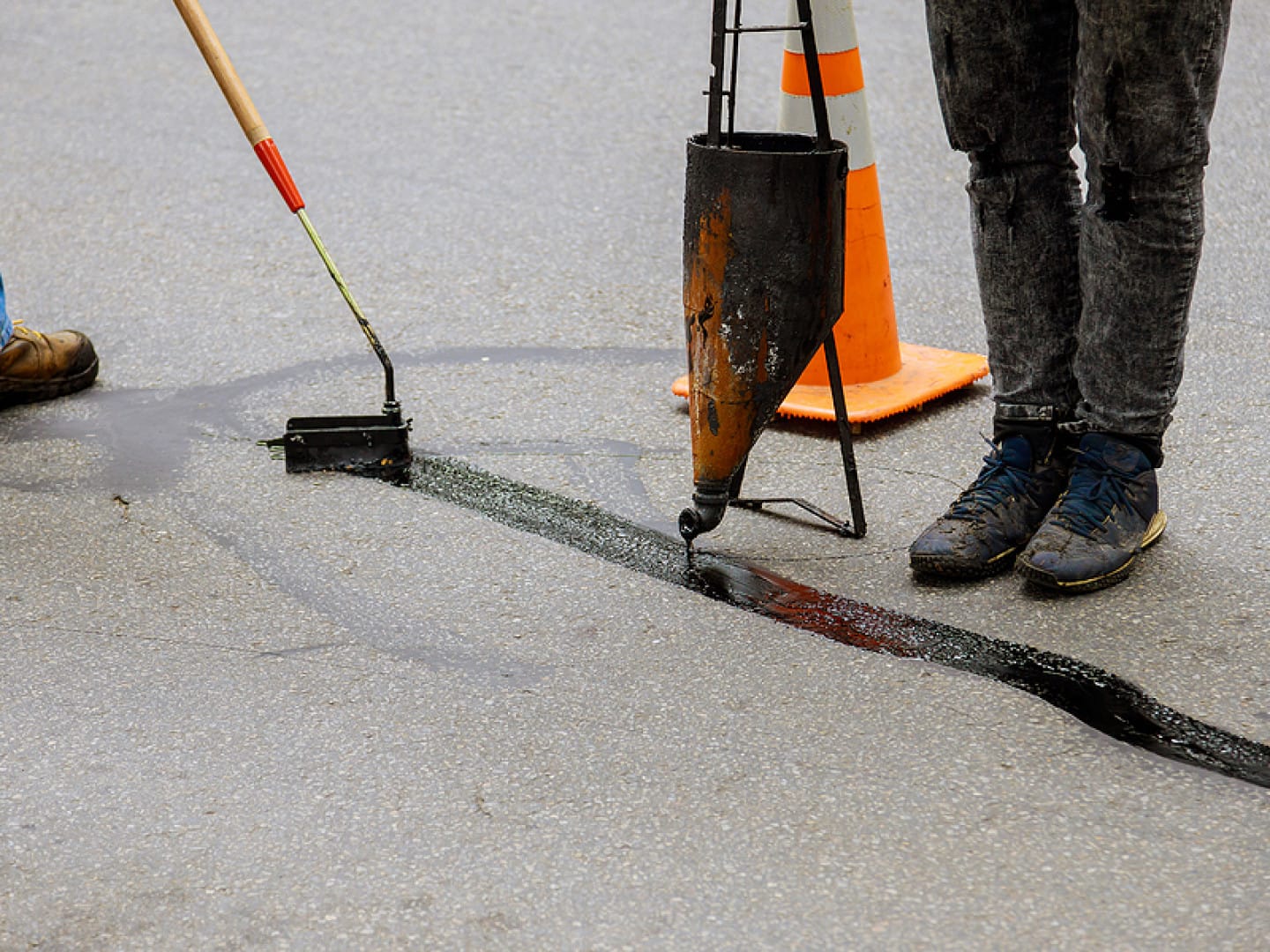
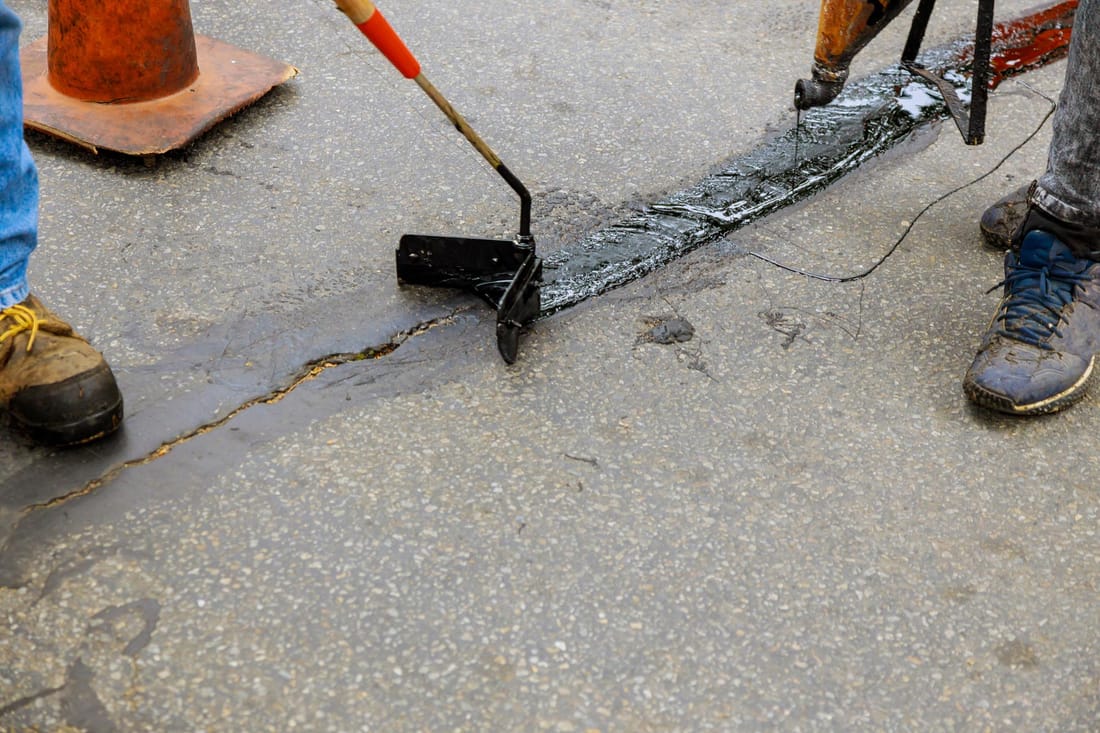
Once the surface is clean and dry, we focus on crack filling. For narrow, working cracks we use hot-applied rubberized crack sealant. We rout or blow out the crack, heat the material in a melter-kettle, then apply it so it sits slightly crowned above the surface. As it cools, it adheres to the crack walls and flexes with the pavement during temperature swings. For wider non-working cracks or small voids, we may use a specialized cold-pour crack filler or patching mix, depending on the depth and location.
After crack filling, we tape or barricade sensitive areas like sidewalks, drains, and adjacent concrete so they stay clean. Then we mix the sealer. Precision Asphalt Houston typically uses a refined coal tar or asphalt emulsion sealer with sand and additives blended in. The sand improves traction, skid resistance, and wear, which matters for sloped driveways or drive lanes. Additives help the material cure properly in Houston’s heat and resist tracking.
Application is done with squeegees, brushes, and spray equipment, depending on the area. For residential driveways, we often use a combination of squeegee and brush to work the sealer into the surface. For larger commercial lots, we use a calibrated spray system along with squeegee machines to get an even, consistent film thickness. In most cases we apply two thin coats instead of one heavy coat, which reduces the risk of peeling and helps the sealer cure evenly.
Finally, we allow the sealer to cure and then remove barricades. Typical light foot traffic is fine after about 24 hours, but we recommend keeping vehicles off the surface for 24 to 48 hours depending on the temperature, humidity, and sun exposure. During summer in Houston, cure times can be faster, but shaded areas may still need extra time.
Materials, Options, And What Affects The Cost
Not all sealcoats or crack fillers are the same, and the right choice depends on how and where your pavement is used. At Precision Asphalt Houston, we explain your options in plain language so you can decide what makes sense for your property and budget.
For sealcoating, the two main categories are coal tar emulsion and asphalt emulsion. Coal tar sealer has strong resistance to gasoline, motor oil, and other automotive fluids, which makes it a popular choice for gas stations, loading zones, and busy retail parking lots around Houston. Asphalt emulsion is lower odor and sometimes preferred near schools, medical offices, or residential communities. Within each category, we can adjust sand load and additives based on how much traffic and turning movement your surface sees.
Crack filling materials also vary. Hot rubberized crack sealant is our go-to for most structural cracks because it bonds well, remains flexible during Houston’s heat cycles, and stands up to vehicle traffic. For areas that will later receive an overlay or for hairline surface cracks, a different, thinner material may be appropriate. We match the filler to the crack width, depth, and movement so the repair does not simply pop out a few months later.
Several factors influence project cost. The size of the area is the most obvious one, but condition matters just as much. A fairly new lot with minor cracking and minimal cleaning needs will be less costly per square foot than an older surface with lots of cracks, oil-saturated spots, and edge failures. The choice of sealcoat type, how many coats you want, and whether we are doing related work like patching potholes or restriping will also affect price.
Access and phasing are another cost driver. In a busy Houston shopping center, we may need to break the job into multiple phases so tenants can stay open, which requires more trips and traffic control. Apartment communities often need weekend or nighttime work to minimize disruption. We plan those logistics with you in advance and build them clearly into the estimate so there are no surprises.
Our estimates from Precision Asphalt Houston spell out the material types, number of coats, crack filling method, and any extras like pothole repair or striping. That way you are not just comparing a single price number, you are comparing what is actually being done to protect your pavement.
Common Houston Pavement Problems And How We Address Them
Properties in Houston tend to share a few recurring asphalt problems because of our weather and soil. Recognizing these issues early and understanding how sealcoating and crack filling fit into the solution can help you make smart decisions.
Oxidation and color fading show up first. Within a few years of installation, unsealed asphalt turns gray and chalky. This is the binder drying out from sun exposure. Once that happens, the surface becomes brittle and more prone to cracking. Sealcoating before this gets severe can slow that aging. If your lot or driveway is already very dry and raveling (stones working loose), we may recommend minor repairs and a heavier preparatory cleaning before sealing.
Alligator cracking is a pattern of many small, interconnected cracks that look like reptile skin. In Houston, this often appears in drive lanes where garbage trucks or delivery vehicles turn or stop, or in areas where the base has softened from trapped water. Simple crack filling is usually not enough here. We often cut out and patch those sections, then sealcoat the whole area. The sealcoat helps blend the patch visually and protect the surrounding pavement.
Edge failures are common along driveways that border soft soil or drainage ditches, especially after heavy Gulf Coast rains. Once the edge breaks off, vehicles start driving closer to the remaining edge and the break widens. In these cases, we look at stabilizing or rebuilding the edge, then sealing. Sealcoat on a weak edge alone is not a long term fix, so we will be honest about where structural repairs are needed.
Standing water is another Houston-specific concern. If your pavement has low spots that hold water for days after a storm, that water is constantly working its way into hairline cracks. Sealcoating helps reduce how quickly water enters, but we may also recommend patching or leveling those depressions first. During our initial visit, we often ask when and where you see puddles so we can address the root causes.
Finally, fuel and chemical spills are a big issue in our busy metro area. At drive-throughs, gas stations, and loading docks, repeated spills can soften asphalt and cause premature failure. In these zones we usually specify a more chemical-resistant sealer and pay extra attention to cleaning and priming before we apply it. We may also suggest a more frequent maintenance schedule for those high abuse spots compared to the rest of the lot.
What To Expect When You Hire Precision Asphalt Houston
When you schedule asphalt sealcoating and crack filling with Precision Asphalt Houston, we walk you through the entire process so you can plan around it and keep things running smoothly at your home or business.
Before work begins, we provide a written scope and site map if needed. For commercial jobs, we coordinate with property managers or business owners on phasing, tenant notices, and traffic control. You will know which sections will be closed on which days and where vehicles can park during the work. For residential driveways, we help you pick dates that work around your schedule and expected weather.
On sealcoat day, we start by putting out cones, tape, or barricades and posting any required signs so people know where not to drive or park. We double check that the surface is dry and that cars are moved. If vehicles remain in key areas, we will knock on doors or reach out to your on-site contact before proceeding.
During the work, we keep communication open. If we discover a hidden issue, such as a soft spot that crumbles during cleaning or a crack that is wider than it appeared, we will show it to you and explain options before adding any extra repair. You are never left guessing what is happening or why something changed.
After the sealcoat is applied, we will tell you exactly when foot traffic and vehicle traffic can resume for your specific project. We often suggest keeping sprinklers off, avoiding sharp turning of steering wheels while stationary, and delaying any heavy deliveries for a short period so the fresh surface is not scuffed or gouged.
We also leave you with a simple maintenance game plan. For most Houston properties, a good rule of thumb is crack inspection every year and sealcoating every 2 to 4 years, depending on use. We can set reminders if you like, or you can call Precision Asphalt Houston any time you notice new cracking or fading. Our goal is a straightforward relationship where you always have someone local you trust to look after your pavement.