Home › Industrial and Heavy-Duty Asphalt Paving
Handle heavy loads with confidence using industrial asphalt paving in Houston, TX. We build truck yards, loading areas, and warehouse drives with thicker sections and strong bases. Proper design reduces rutting and failures under frequent heavy traffic. Contact us to engineer a pavement structure that fits your site demands.
Precision Asphalt Houston provides professional industrial asphalt paving throughout Houston, TX, Texas and the surrounding area. Our licensed, insured crew delivers safe, clean, on-time work with a free estimate before anything begins. Call (346) 523-8307 or request your free quote.
Industrial Asphalt Paving Built for Houston Workloads
Industrial and heavy-duty asphalt paving is a different world from standard parking lots. At Precision Asphalt Houston, we design pavements to carry loaded 18-wheelers, forklifts, container stacks, and constant turning traffic without rutting or breaking apart in the Gulf Coast heat.
When we look at an industrial site in Houston, we start with how the pavement will actually be used. We ask about axle loads, traffic patterns, where trucks stop and turn, where forklifts cross joints, and where containers or material racks sit for long periods. That information drives the design thickness, the asphalt mix type, and the base structure. A driveway used by light delivery vans might only need a moderate-duty section, but a loading dock where 80,000 lb trucks back in every 20 minutes needs a much thicker, stiffer pavement.
Houston’s climate also matters. Summer surface temperatures can exceed 150°F, and when you combine that with slow-moving or stopped heavy vehicles, softer mixes will rut. Precision Asphalt Houston uses high-stability, polymer-modified or performance-graded asphalt mixes in critical heavy-duty areas so the pavement resists shoving and wheel path depressions. This is the kind of detail that separates a surface that looks good on day one from one that is still performing ten years later.
How Industrial and Heavy-Duty Asphalt Paving Is Installed
Our industrial asphalt paving process is methodical, because shortcuts show up quickly when 18-wheelers roll over the finished surface.
1. Site evaluation and design: We begin with a site visit to review existing soil conditions, drainage flow, and current pavement performance. For new construction, we often recommend soil proof-rolling and, if needed, stabilization with lime or cement on Houston’s clay subgrades. For existing pavements, we determine whether full-depth reclamation, milling, or spot repair makes the most sense. We then design the pavement section: subgrade treatment, base type and thickness, and asphalt lift thicknesses tailored to your traffic.
2. Subgrade preparation: Industrial paving always starts with solid support. We grade and compact the subgrade to proper density with rollers suited to clay soils, then address soft pockets instead of just covering them up. On many local industrial sites, we stabilize expansive clays to reduce seasonal movement and pumping under truck loads.
3. Base installation: For heavy-duty areas, Precision Asphalt Houston commonly recommends 6 to 12 inches of crushed limestone or recycled concrete base, compacted in lifts with vibratory rollers. In some cases where drainage is a concern, we use open-graded base with underdrains to keep water from sitting under the pavement.
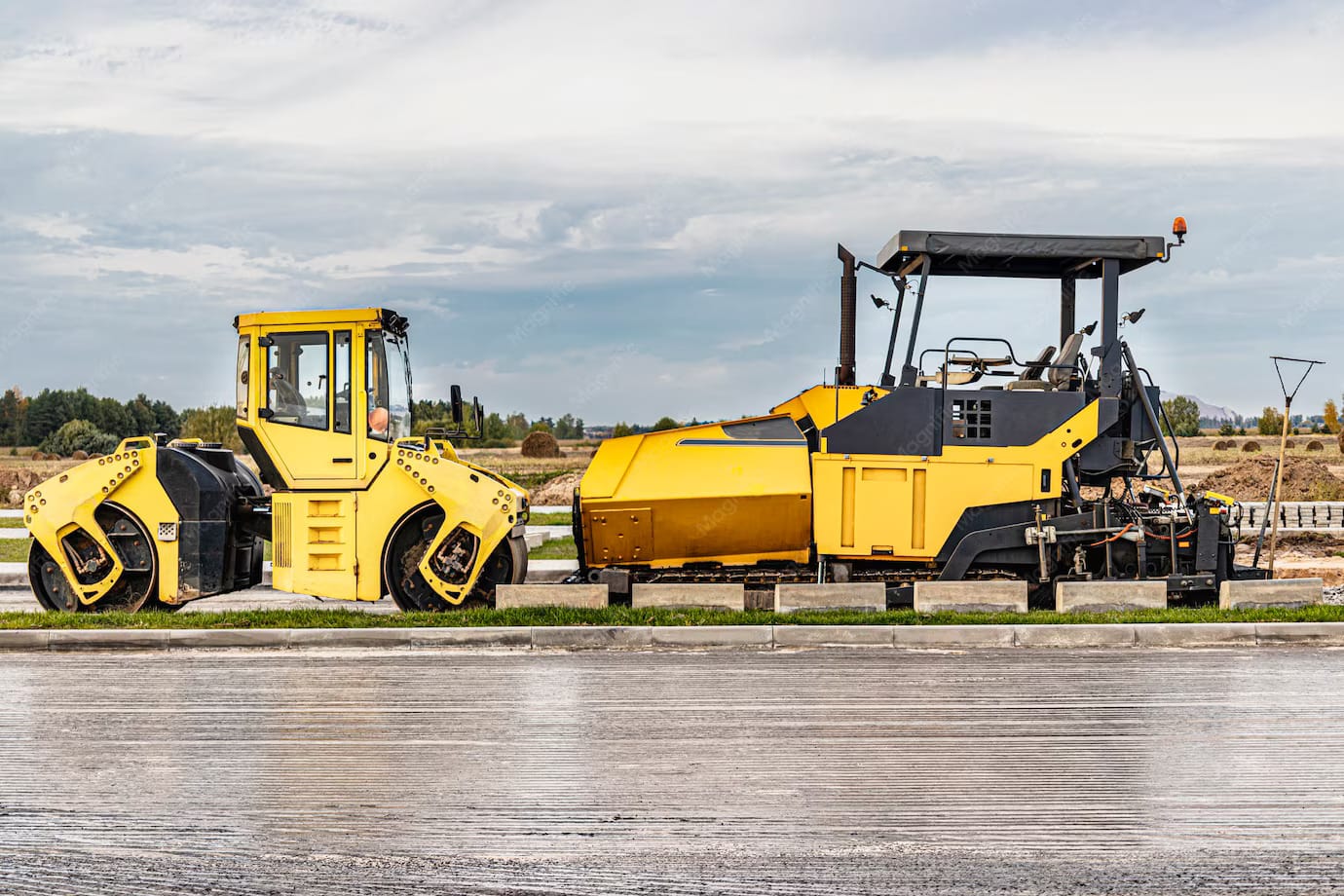
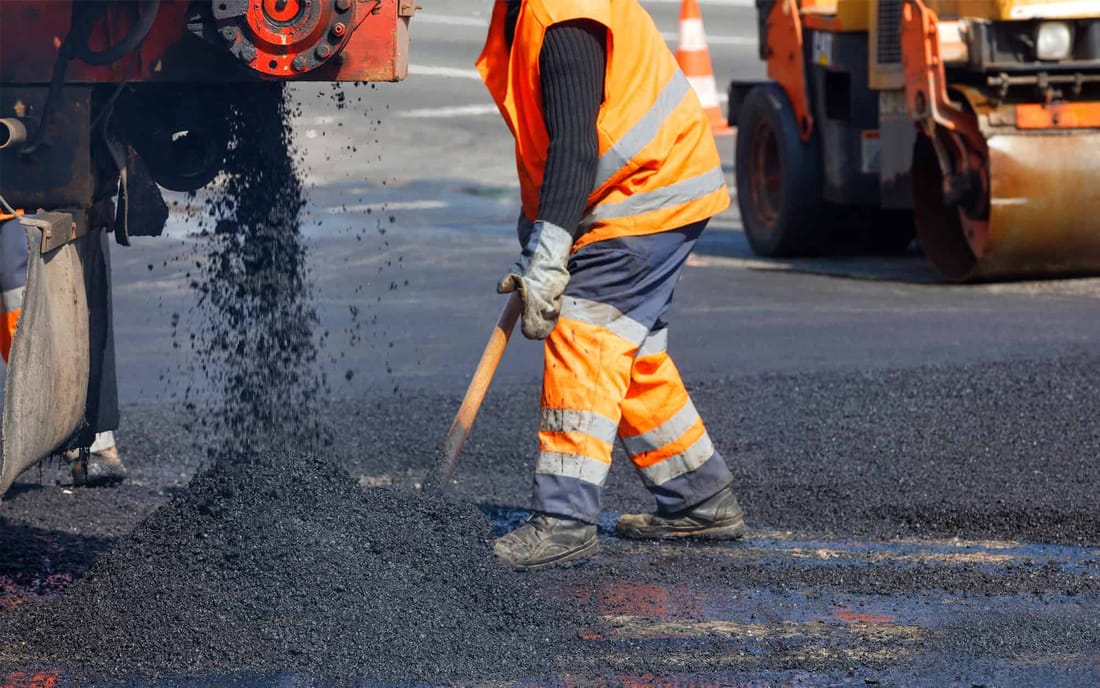
4. Asphalt placement: We place asphalt in multiple lifts for strength and uniform compaction. A typical heavy-duty section may use a coarse, high-stability base course and a slightly finer surface course for a smoother finish. We pave with a self-propelled paver for grade control, then compact immediately with a rolling pattern matched to the mix design and thickness. Joints are staggered and carefully compacted, since longitudinal joints are often where industrial pavements start to fail.
5. Final detailing and striping: For industrial yards and terminals, layout is critical for safety and efficiency. We mark truck lanes, dock approach lines, fire lanes, and equipment paths as needed. Where forklifts operate, we review turning radii and staging areas so the markings and pavement structure match real-world use.
Design Choices That Affect Cost and Performance
Industrial asphalt paving is not a one-size-fits-all product. Several design choices affect both cost and long-term performance, and we walk Houston facility managers through those tradeoffs before any contract is signed.
Section thickness and base type: The biggest cost driver is usually total pavement thickness. A light industrial entrance might succeed with 4 inches of asphalt over 6 inches of base. A distribution yard with constant loaded trailers might need 6 to 8 inches of asphalt over 10 to 12 inches of base. Using recycled concrete base can sometimes lower material cost, but in some soil conditions crushed limestone performs better. We explain the pros and cons for your specific site.
Mix selection: Standard highway mixes are not always ideal for low-speed, high-load industrial traffic. Precision Asphalt Houston uses heavier asphalt binder content, stiffer performance grades, and in some cases polymer-modified binders in high-stress locations like turning areas at dock doors or fuel islands. These mixes cost more per ton but usually pay for themselves by reducing rutting and surface deformation.
Drainage and slopes: Houston’s heavy rain events expose any weaknesses in drainage. Standing water softens subgrades and accelerates asphalt stripping. When we design industrial pavements, we plan slopes so water leaves loading docks, container yards, and fuel areas quickly and safely. This can involve trench drains, inlets in low spots, and careful slope control with the paver. Improving drainage often costs less than repeated structural repairs.
Phasing and downtime: Many industrial clients cannot shut down an entire yard. We often phase work so truck traffic can be rerouted while one section is rebuilt. This can add some mobilization cost but prevents missed shipments or production delays, which are usually far more expensive than any added paving cost.
Common Industrial Pavement Problems in Houston and How We Address Them
Because we work across ports, terminals, plants, and warehouses in the Houston area, we see the same types of industrial pavement failures repeat. Knowing why they happen helps us design repairs that actually last.
Rutting in wheel paths: In heavy trucking lanes and forklift corridors, asphalt can push sideways and form ruts. In Houston, this is often a combination of high temperatures, slow-moving loads, and a mix that is too soft or too thin. Our fix usually involves milling out the deformed area to a depth that removes the unstable layer, improving compaction or base support if needed, then installing a stiffer heavy-duty mix in multiple lifts.
Alligator cracking and base failure: When we see interconnected cracking that looks like reptile skin in loading areas, it almost always points to base or subgrade failure, not just surface age. Covering it with a thin overlay is a temporary bandage. Precision Asphalt Houston typically performs full-depth repairs, cutting through the asphalt, removing failed base, compacting new base or stabilized subgrade, then installing new heavy-duty asphalt. For widespread issues, reconstruction or full-depth reclamation may be more cost-effective than patchwork.
Edge breaking and raveling: Industrial yards often expand informally, with trucks driving off the edge of the designed pavement. That unconfined edge breaks down quickly. We address this either by widening the pavement with proper base support or by adding concrete or asphalt edge restraints in areas where equipment frequently crosses.
Fuel and chemical exposure: At tank farms, fuel racks, and maintenance bays, petroleum spills can soften asphalt over time. In those spots we often recommend a combination of thicker asphalt, specialty binders, or in some cases a concrete pad integrated into the asphalt system where exposure is constant.
What Houston Industrial Clients Should Know Before Hiring a Paving Contractor
Industrial and heavy-duty asphalt paving is a long-term investment in your facility’s operations. Here are practical points to consider before you choose a contractor in Houston.
Ask for design details, not just a total price. A serious proposal from Precision Asphalt Houston will specify thicknesses for each layer, base material type, asphalt mix types, and compaction targets. If you receive a quote that simply says “6 inches asphalt, turnkey price,” with no mention of base or subgrade treatment, you have no way to judge whether it will hold up under your actual loads.
Confirm experience with heavy loads and live facilities. Industrial sites rarely shut down completely. Your contractor should be able to phase work around your operations, coordinate with your safety requirements, and understand how truck traffic flows. We regularly work in refineries, plants, and distribution centers in Houston, so we plan around shift changes, high-volume shipping windows, and site-specific safety rules.
Plan for maintenance from day one. Even the best industrial asphalt pavement needs care. Sealcoating is not always appropriate for very heavy-duty truck areas, but crack sealing, localized patching, and periodic overlays are. We help clients build a realistic maintenance budget so they preserve structure instead of waiting until full reconstruction is the only option.
Factor Houston’s environment into scheduling. High humidity, pop-up thunderstorms, and summer heat affect when and how asphalt can be placed. Precision Asphalt Houston schedules industrial paving windows so compaction can be achieved before the mix cools and so newly placed asphalt is not exposed to heavy rain while it is still tender. Proper timing improves density, which directly improves pavement life.