Home › Parking Lot Paving & Installation
Build a professional first impression with expert asphalt parking lot paving in Houston, TX. We design and install new lots with proper grading, drainage, and traffic flow. From small retail lots to large commercial sites, our crews deliver smooth, long lasting pavement. Contact us for a detailed parking lot layout and paving quote.
Precision Asphalt Houston provides professional asphalt parking lot paving throughout Houston, TX, Texas and the surrounding area. Our licensed, insured crew delivers safe, clean, on-time work with a free estimate before anything begins. Call (346) 523-8307 or request your free quote.
Asphalt parking lot paving in Houston done the right way
If you manage a property in Houston, you already know a parking lot takes a beating from our heat, sudden storms, and heavy trucks. At Precision Asphalt Houston, our parking lot paving and installation focuses on building pavement that holds up to Gulf Coast weather and local traffic patterns, not just something that looks good for a few months.
We start every asphalt parking lot paving job with a walk-through of your site, not a quick quote from a satellite photo. We look at how water currently drains, where cars actually drive and park, where delivery trucks turn, and what parts of the lot are soft or failing. In Houston, standing water and poor subgrade are the two biggest reasons lots fall apart early, so we treat those as must-fix items on day one.
From there, we help you choose the right pavement structure for how your property is used. A medical office with steady car traffic needs a different build than a distribution yard with daily 18-wheeler traffic. Instead of a one-size-fits-all thickness, we adjust base depth and asphalt layers based on real loading so you are not overpaying for unused strength or underbuilding a lot that will rut in two summers.
Planning and design that fit your Houston property
Good asphalt parking lot paving starts on paper. We begin with a simple layout sketch that becomes a scaled plan. For new installations, we coordinate layout with building entrances, dumpsters, drive-thrus, loading docks, and any existing concrete. The goal is to make the lot intuitive to drive, easy to maintain, and compliant with local codes.
Drainage planning is a big priority in the Houston area because of heavy downpours and flat terrain. We design slopes so water finds inlets or sheet drains to the edges instead of pooling in the drive lanes. Often this means light regrading, adding or adjusting inlets, or raising low spots with properly compacted base. A lot that drains well lasts longer and is safer for your customers.
We also talk about surfacing and striping details during design, not as an afterthought. That includes stall size, ADA parking and ramps, crosswalks, stop bars, speed bumps, and drive aisle widths based on your use. For example, a church or school may need extra accessible spaces and wider aisles for buses. A restaurant near a busy Houston corridor might benefit from dedicated pickup zones and clear directional arrows to keep traffic moving smoothly.
Finally, we help you choose options that control long term costs. That might include heavier sections where trash trucks turn, thicker asphalt at entrances where vehicles brake and accelerate, or using different mix designs for main drive lanes versus parking bays. These details cost a little more up front but typically extend the life of the lot several years in our climate.
How we install a long lasting asphalt parking lot
Once plans are set, Precision Asphalt Houston follows a step by step installation process to keep the job organized and predictable.
1) Site prep and demo: For new lots, we clear vegetation, remove organic soils, and strip any unstable material. For replacement, we saw cut clean edges along tie in points, then mill or excavate the old asphalt and soft base. We haul unsuitable material off site, which is a key cost driver.
2) Grading and base construction: We bring in a quality crushed limestone or recycled concrete base, spread it in layers, and compact it with vibratory rollers. In Houston's clay soils, this step is critical. We check and adjust grades to achieve the planned drainage slopes, usually between 1 and 2 percent, then proof roll the base. If we see movement or pumping, we correct it before paving.
3) Asphalt paving: We install asphalt in one or more lifts using a paver for consistent thickness. Residential and light commercial lots may use a single 2.5 to 3 inch surface lift over a thicker base. Heavier use areas often get a binder course plus a surface course. We use TXDOT approved mixes and match the mix type to the application. While the asphalt is hot, our crew immediately compacts it with steel drum and rubber tire rollers to lock in density and smoothness.
4) Joints, tie ins, and details: We form neat joints at concrete approaches, sidewalks, and existing asphalt so water cannot infiltrate edges. Around storm drains and utility lids, we take extra time to build tight transitions that do not unravel. This is often where cheaper jobs fail first.
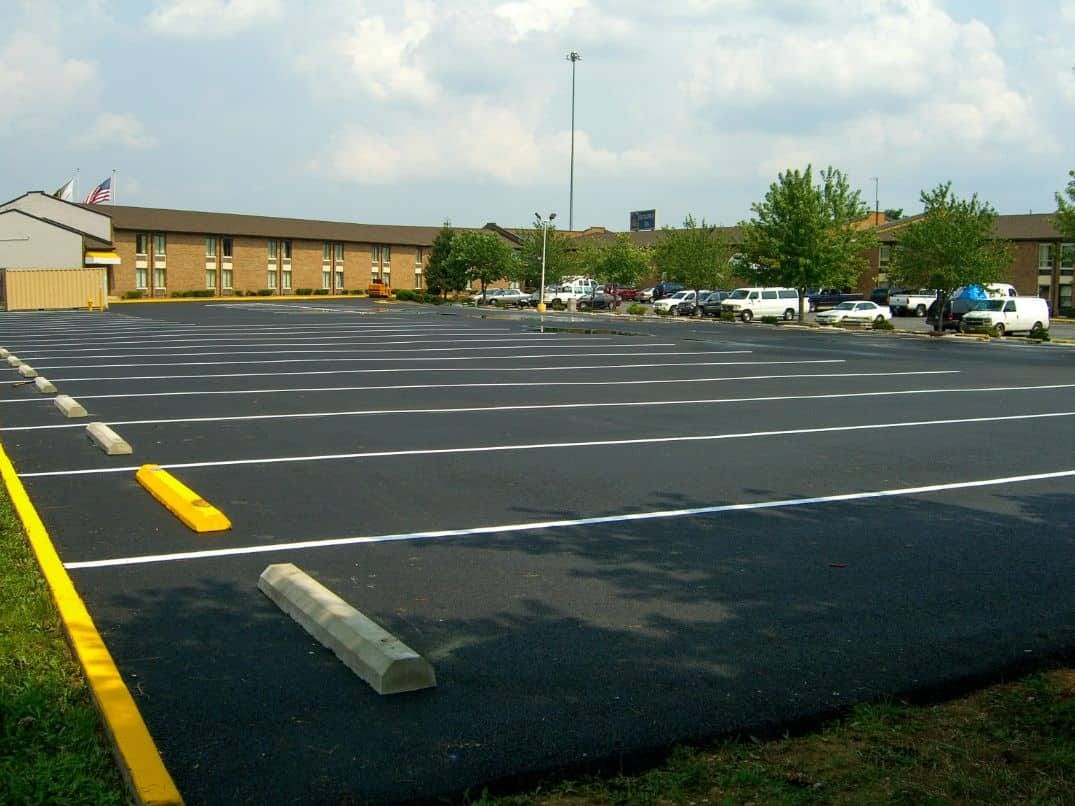
5) Markings and accessories: After the asphalt cools, usually within 24 hours, we stripe the lot, install wheel stops if needed, and place signage. If speed bumps or traffic islands are part of the design, we install them in a way that allows future maintenance without tearing up large areas of pavement.
Throughout the project, we keep your property accessible as much as possible, phasing work to maintain entry points or scheduling sections during slower business hours. For occupied sites, we often pave in stages and coordinate with your operations team so customers and tenants always know where to park.
Costs, timelines, and Houston specific timing
Budget is always a factor, so we explain what drives asphalt parking lot paving cost up or down. The biggest items are thickness and size of the project, quality and depth of base material, amount of demolition and hauling, drainage improvements, and site access. A wide open lot that we can pave without many obstacles is more efficient than a tight site with many islands and handwork.
Material prices in the Houston area fluctuate with oil and aggregate markets. When we price a job, we lock in those numbers for a set period so you can plan. For larger projects, we sometimes break the work into phases over two fiscal years, which helps property managers and associations handle the spend.
Most small to mid-size parking lots can be completed in two to five days of active work, not counting cure time before striping. Bigger commercial sites can run one to two weeks. We provide a clear schedule so you know what to expect each day, including which entrances will be open and when traffic can return to the new surface.
Houston's climate affects when and how we pave. Ideal paving season is typically October through April, when temperatures are moderate and afternoon storms are less violent. We can and do pave in summer, but we watch afternoon thunderstorm patterns, plan earlier start times, and use mix temperatures and rolling patterns that consider high surface temps. The key is making sure asphalt is placed and compacted before any rain hits. A well planned job that respects the weather will outperform a rushed summer project every time.
Before you hire anyone, ask them how they plan to handle unexpected soft spots in the subgrade, what minimum compaction levels they target, and how they will manage traffic during the work. Clear answers to those questions are a good sign you are dealing with a contractor focused on longevity, not just the lowest bid.
Common problems we prevent and how to maintain your new lot
Houston parking lots typically fail from three main causes: poor drainage, thin or weak base, and neglected maintenance. At Precision Asphalt Houston, our installation process is built around avoiding those problems from the start, then giving you a simple plan to keep the lot in good shape.
To prevent water related failures, we design and check slopes, protect joints, and avoid low spots where water can sit. During construction we rework any areas that hold water during proof rolling or testing. To combat base failures, we never pave over pumping or visibly soft areas; we undercut and repair them so they do not telegraph through the new asphalt.
Once your new asphalt parking lot paving is complete, we suggest a clear maintenance schedule. This usually includes a first inspection after the first heavy storm season, then yearly walk-throughs to catch early issues like small cracks, edge raveling, or localized settlement. Timely crack sealing is inexpensive and prevents water from reaching the base, which is especially important here because of expansive clays.
We also discuss when to consider seal coating based on your traffic and appearance requirements. While seal coat does not fix structural issues, applied at the right time it can extend surface life and improve appearance. For high traffic or heavy truck areas, we may recommend a heavier structural design instead of relying on frequent seal coats.
Finally, we help you create a realistic plan for heavy vehicle routes. Designating trash truck paths, delivery truck access, and turning areas prevents random heavy loads from damaging weaker parts of the lot. Simple measures like this, combined with a solid installation, can add many years to the life of your parking lot and reduce your overall cost of ownership.